

Conversations with community leaders on emerging investment opportunities, precision nutrition, GLP-1-driven market shifts, and the science of building successful companies. Featuring interviews by Food & Health Angels Venture Fellow Troy Huang.
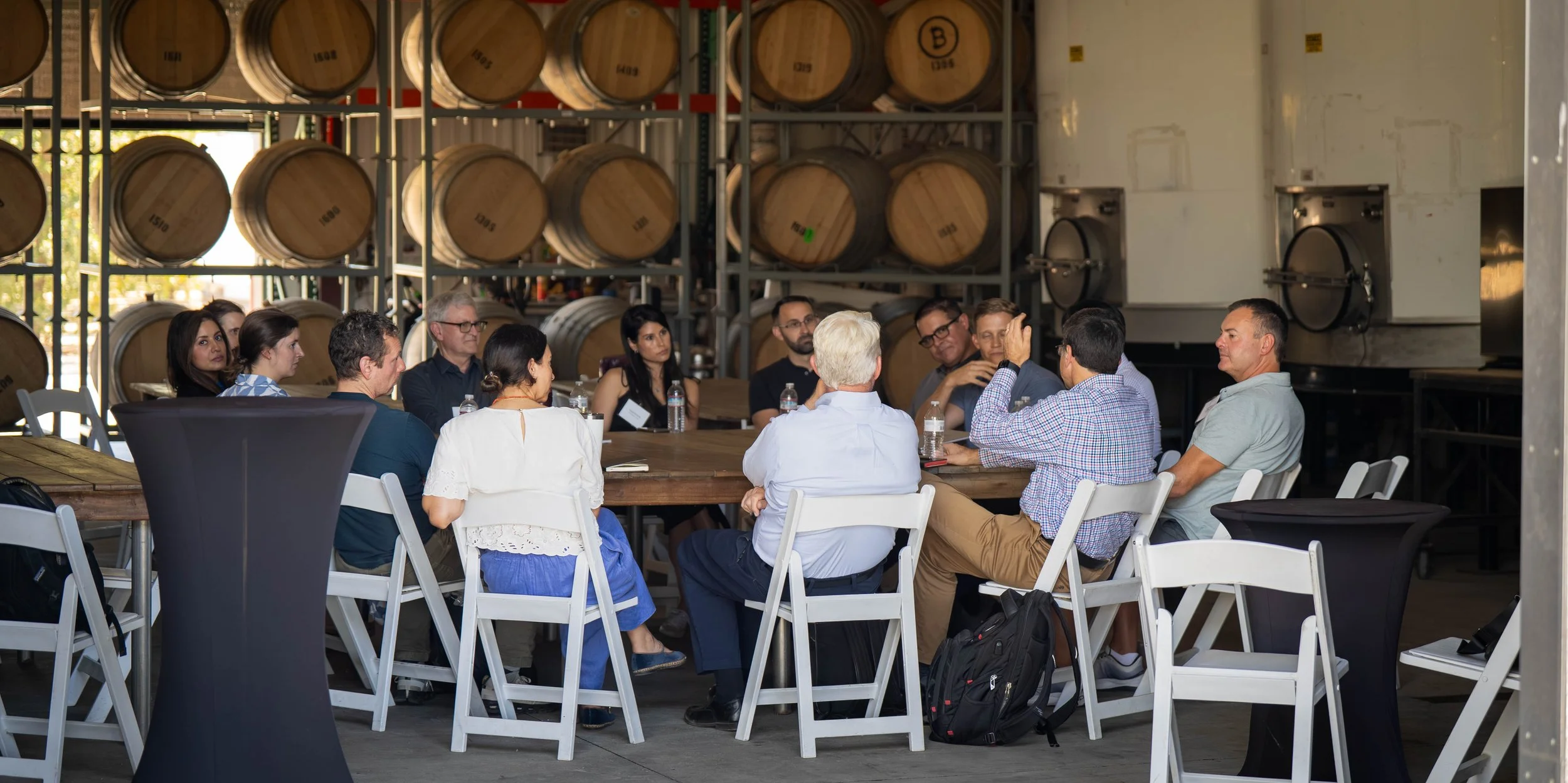
Max Schmitz on Startup Investments & GLP-1 Trends
Troy Huang: As an investor, regardless of current trends, what question are you most interested in for health and wellness?
Max Schmitz: In 2025, GLP-1 weight-loss drugs generated more revenue than AI. GLP-1s are basically the first consumer health pharmaceutical. With 73% of Americans being overweight or obese, over 200 million people could take these drugs. But the food market hasn't caught up—people are not just eating less, they are changing what they eat and look for. It's a huge $200M+ person white-space market that investors are not looking at enough yet.
Dr. Jaron Ross on Consumer Mindsets & GLP-1 Science
Troy Huang: What evidence actually changes consumer or physician behavior?
Jaron Ross: It usually starts with influencers or anecdotal evidence to spark interest, followed by rigorous cited sources and scientific evidence to validate their decision.
Troy Huang: How do social media and science shape how people view GLP-1s?
Jaron Ross: Weight loss is not the only metric. GLP-1 drugs have downstream effects—including muscle mass loss risk, anti-inflammatory benefits, and potential cognitive protection. At Thrivespan Labs, we guide patients toward the right medicine, dosage, and timing to optimize benefits and minimize side effects.
Dr. Robert Hackman on Biomarkers & Public Health
Troy Huang: My question is about nutrition. As a nutrition student or when we get to the public, how can we translate the function of biomarkers to the public about their health benefits?
Robert Hackman: I think first and foremost, you need to know if the biomarkers are accurate. The second thing, which I have debates with Justin Siegel about often, is the cost. Why should I pay to have a test done that is going to cost me more money than I can afford, because I'm just a middle-class American and I don't have a whole lot of disposable income? For you and me intellectually, "Oh, biomarkers are really cool!" But the practical application to the masses of people... first and foremost in my mind is cost. And that assumes that it's accurate. Which biomarker are we talking about? And last point: you're a nutritionist. Do we really need biomarkers to tell people to eat three servings of vegetables, two servings of fruit, whole grains, lean protein, and healthy oils? We don't need data to tell people that! What we need are the tools to motivate people to do what they already know to do.
Troy Huang: Yeah, I think that's very right. As researchers, we discover biomarkers, but for applicability, the most important thing is accuracy, cost, and whether it helps people change their mind.
Robert Hackman: Are we talking about education and behavior change, or are we talking about nutrition science now?
Michael Russelle Alvarez on Food Formulation & Categorized Nutrition
Troy Huang: Where do you see the clearest first willingness to pay as a market style (formulation, ingredient validation, health claims)?
Michael Russelle Alvarez: We are already getting paid by clients to work on their formulations and developing new products. For an analytical chemist, validation means quality control/authentication, whereas for us, it's helping companies formulate new products on the ground floor.
Troy Huang: How does precision nutrition connect with your work?
Michael Russelle Alvarez: Most people see precision nutrition right now not at the individual biomarker level, but at the phenotypic category level (e.g., people needing more fiber, people with cardiovascular risk). We help companies identify compounds/ingredients to formulate products tailored to those specific need-based categories.
Janine Elliott on Founder Mindset & Coachability
Troy Huang: What milestone turns a company from interesting to investable from your perspective?
Janine Elliott: I become a lot more interested if the startup shows signs of coachability. That's the number one thing I look for: a growth mindset, humility, and willingness to learn.
Troy Huang: Can you explain a little bit about coachability?
Janine Elliott They ask questions, recognize that the customer ultimately decides if the business is successful, are open to feedback and act on it, and pair high curiosity with a bias to action.
Troy Huang: So it's more about mindset rather than just personality or science background?
Janine Elliott: Exactly. It's a skill set and mindset that people can cultivate.